11 February 2021

Early Blooms


It’s Plum Blossom season in our area, and lots of other spring flowers are blooming too. I visited Kana Botanical Gardens this week with friends. It was so nice to get out of the apartment and enjoy the sunshine! 

Plum trees smell heavenly. 


Other early spring flowers in bloom: 


Brusselsprouts:


Good friends: 


Yummy treat (raspberry & rose sorbet):


Koi fish: 


It’s hard to see in the picture below, but this fish looked very, very pregnant. 


Mt Fuji (covered in snow) was visible that day in the distance


10 February 2021

Family Update


Lynn 

Test results: Heart is “normal.”  Blood work shows high cholesterol. Started meds. Monitoring blood pressure. Japanese Cardiologist seems not to be worried. Lynn meets with PCM again next week to discuss all the findings from all the lung and heart tests. 

I went to a bakery recently that sold freshly ground coffee as well as bread and goodies. I used Google Translate to determine which coffee flavor that I should buy for Lynn. 

When I saw “German,” “Solid,” and “doesn’t move,” I knew this was the coffee for Lynn. 


Katie and Noah 

Noah’s birthday also was this week. Happy 24th birthday to you, Noah! I think this picture that they sent us must have been taken right after he blew out his candles since there are 24 smoking candles on this cake. 

Katie recently was hired by her church to lead the children’s choir. She is abundantly qualified for that position, and it’s very nice that she gets an extra little stipend for her time and effort. 

She also has the potential of a new job. Things are still in the works, but she had an interview and is awaiting official papers. More on that soon!


Josh 

Josh is about a month into his final semester of college. Hard to believe that he will graduate with a degree in Finance and Marketing in about 3 months. Then what? Who knows? Stay tuned. 

Josh used his recently acquired snowboard equipment on a weekend adventure near Boone, NC, at the end of January. A group of his friends rented a house for the weekend and got in 2 solid days on the slopes. He is pictured below with Emma. 


I sent a Jeep jigsaw puzzle to Josh for Valentine’s Day. Emma helped him put it together. They finished in about 3 days, and it’s not even February 14 yet. 


Guess I know what to get them in the future. 


Isaac 

Isaac is a few weeks into 2nd semester and is doing well. He has a Nutrition class and a Ceramics class this semester in addition to his regular classes. School is still meeting in person. 

Another family in our apartment building recently put an ad on the tower Facebook page that they were getting rid of an assortment of Legos. I sent Isaac down to check it out, and he came back with a garbage bag full of legos. He is considering which pieces/sets that he can re-sell for a profit. I must be passing on my love of thrifting” to him. 

This picture shows one of the Lego sets. This had 3 books of instructions, and took Isaac about 3 days to finish. Yes, some Legos are for little kids, but I guess these intricate sets are intended for older people and are really no different than putting together a jigsaw puzzle. 

Baseball has received the official “go ahead” from the school, but the team has not yet started practicing as a group. Isaac still goes out to the field a few times each week with a group of about 3-6 other boys to practice on their own. Hopefully, the Covid numbers will go down, and the number of baseball players will go up. You would think that a school of 800 kids would be able to put together a baseball team! 


Covid 

He’s been with us so long that it seems like he’s part of the family now, right?  The Covid numbers on base hit a high at 168. We are now at 63.  I can’t blame the vaccine for the decrease in numbers since most people haven’t received it yet. About 1/2 of the active duty military members (around 1/4 of the population on the base) have just received the 2nd vaccine this week. Lynn had his 2nd shot yesterday, and he seems to feel fine so far. No ill side effects. Japan extended their State of Emergency until March 7. We hope to gain some freedoms back at that time. The base has reopened the gym to civilians, and some restaurants on base are again serving food in person. Most importantly to us, the worship services at the chapel are now back to every weekend rather than every other. 


You? 

Now that you are all caught up on our lives, we would love to hear from you. Drop us an email and let us know what’s new with you. 

09 February 2021

Parmesan Crusted Salmon


This is my new favorite recipe for salmon.  


Parmesan Crusted Salmon


Ingredients
• 4-6 salmon fillets
• 1/3 cup breadcrumbs (Panko or regular)
• 1/3 cup Parmesan cheese, grated
• 2 garlic cloves, minced
• 1 teaspoon each: parsley, thyme, black pepper
• ½ teaspoon salt
• 4 tablespoons (1/4 cup) unsalted butter, melted


Preparation Steps
1. Preheat oven to 400 (or use air fryer). Line a large baking sheet with parchment paper. Place the salmon filet on the baking sheet.
2. In a small bowl, combine breadcrumbs, Parmesan, garlic, salt, pepper and herbs. Mix well.
3. Melt butter and add to mixture.
4. Spread herb/butter mixture over the top of each salmon filet and press down slightly. 5. Transfer salmon to oven and bake 10-12 minutes or until salmon is cooked through and crust is golden. If necessary, turn the oven to broil for 1-2 minutes, but watch closely so crust doesn’t burn.


The fresh salmon from the Japanese grocery store is delightful, and this recipe makes it melt in your mouth.  I'm getting hungry just thinking about it!

08 February 2021

Temari

You already know about my Kokeshi doll obsession. 


Another interest that I have acquired is Temari. Temari is a Japanese craft item. You can think of it as embroidery or cross-stitch on a ball. 


Here are two Temari balls that I purchased which are already complete: 


Click here to see a video from Martha Stewart on how to make Temari balls.  


This article explains the relationship between math and Temari.  Maybe that is why the patterns appeal to me. 

I spent an afternoon with a friend last week working on making our own temari. The kit that I purchased from Japan Amazon had shades of purple for the thread. This was the sample photo from the kit: 


My friend has lots and lots of embroidery thread so I chose different colors that I thought would complement the other temari that I already had. 


Here is the beginning blank “canvas”: 


You use a long needle with one end that is bent to sew the design. 


You use regular sewing pins to mark the area on the ball: 


Then you begin to weave the pattern. 


At this point, I determined that I was doing the pattern incorrectly.  I took the thread all out and started over. 

Here is my second attempt: 


Again, I realized that the pattern did not match the photo from the kit, so I started again a 3rd time. 

It still wasn’t identical to the pattern on the kit, but at least this time it was something that I could live with. 

One side complete: 


Second side complete: 


Finished product: 


My temari is certainly not the quality that I have seen for sale, but it was a fun craft that kept me busy for a few days, and I’m interested to try some more patterns. Which do you like? 


I think this last sample (below) might be my favorite.  Maybe I can practice for years, and maybe someday I can sew something this complicated? I read somewhere that it takes about 10 years to become a certified Temari artist. 


07 February 2021

#54

Lynn's birthday was yesterday.  


This is what #54 looks like: 


He started the day with breakfast in bed. 


Then he had a few video chats including one call with our kids:


The dogs even got involved: 


As we age, the birthdays are good for a few laughs: 


Get it? Taking into account the time zone difference, Lynn turns 54 years old 15 hours before his twin brother does. This is one of only a few times (Guam, Spain, Iraq) that Lynn has “been older” than Lee, since Lee was born 15 minutes before Lynn. 


Gifts also included new work boots: 


and chocolates filled with Japanese liqueur:

Wow! Those pack some punch! 

Lynn had some tests last week and has one more this week. He should receive all the results on Wednesday. I will write an update when we know something definitive. 

04 February 2021

Another Acupuncture

Since I last posted about this topic, I returned to the Japanese dentist office and had another treatment where he used 10 needles on each side and massaged my jaw, neck, and forehead for 20 minutes. It was equally as pleasurable as the first visit. In summary at the end he said, “When you came here your jaw was hard. Now it is soft.”  I have the option of returning there in a month. 

But that’s NOT what this post is about...

I had such a glowing review of these previous acupuncture treatments at the Japanese dentist that I feel the need to give an update on a different acupuncture option which I recently had. This treatment was completely contrary to the first, and I feel the need to make a PSA here explaining the differences with a warning that not all acupuncture is the same.

I recently found out that a Navy medical person on base does acupuncture. I thought I would give it a try since this would be covered by our insurance without any out-of-pocket expense which I had with the Japanese dentist off base ($50 per visit). 

The person who does acupuncture on base is a Nurse Practitioner. He said that he has worked previously at Wounded Warrior in Bethesda.  I told him that I didn’t think that Navy medicine would include a procedure like acupuncture.  He replied that Big Navy is embracing it as an economical procedure for pain relief since the recent Opioid crisis has eliminated many pain medications as options for doctors. He cautioned that some people feel tremendous relief, others not so much. 

I described to him my previous treatment. He explained that this acupuncture does not involve massage or really any muscle relaxation at all. It is focused on pain relief. (Since I only have pain when I chew, I was not sure this was applicable to me, but I thought I would go ahead with it.) This type of acupuncture, called “Battlefield Acupuncture,” involves using small pieces of gold with a sharp point which are inserted into pressure points in your ears. 

To make a long story shorter, I will just say that this was much more painful at the initial procedure and continued to be painful in the 24 hours after. I had a headache on and off, and I was not able to sleep much overnight since l felt pain in my ear when I was lying on either side. I’m not used to sleeping on my back, so it was a long night. And I woke up to find blood on my pillow.

Here are some pictures to help you understand: 


These little gold studs were supposed to fall out on their own within the next 2-5 days. But I didn’t make it that long. The one on the top of the ear lobe was especially painful to the touch. 

Needless to say, I won’t be going back for a repeat treatment. And in summary, please be advised that I don’t recommend ALL acupuncture. Find out what kind of acupuncture it is before you do it! 

03 February 2021

Q&A - History

Q:  I would like a lesson in Japanese history on your blog sometime...please give details about how post WWII has shaped our involvement there.


A:  Oh boy!  I am not a history person in the least way, shape, or form. Isaac should be the one answering this question.  Have I mentioned that before?  He loves history.  If he could make a living out of a degree in History, he would be all over that.  

Ok, here goes. Commodore Perry first arrived here in Yokosuka in 1850.  


I have no idea what that has to do with WWII or today.  Basically, the base was a ship building facility for the Japanese Navy until WWII at which time it was surrendered to the US Military.   


For more info on the history Yokosuka Naval base, see https://www.cnic.navy.mil/regions/cnrj/installations/cfa_yokosuka/about/history.html.

For more information on what has happened since WWII, please see the following 2 websites:


War is heinous and abominable on any front.  Most certainly atrocities took place during and after WWII.  I can't begin to scratch the surface of Japanese/American relations since WWII, but most of the information that I have read makes it seem like MacArthur's government has been beneficial and successful, and that the current U.S./Japan relationship is congenial and economically profitable for this country.  


Surprisingly, MacArthur served briefly as Emperor of Japan.


Digging a little deeper on the Japanese perspective, I found the following answers to the question, "What do Japanese think of WWII?"


Answer 1:
You can ask a Japanese person about WW II...but I can relate my experiences. Most of my contacts have been with Japanese businessmen, many of whom come from ancient and very important families.

As an American lawyer in the course of representing Japanese clients, I have become aware that it takes a good while to get to know each other well enough to speak candidly on this sensitive subject — which is usually avoided in the Japanese culture, as a demonstration of their good manners. Typically, Americans are a bit less reticent.

But, over time — and over drinks (when a foreigner has become personally “accepted”) — there can be candid discussions about what our parents and family had passed-down to us who were born during the war.

One salient point that has often been made is that the Japanese leadership had no idea that the Americans came from the same “fighting tradition” as did their own Samurai. They knew about the British military tradition, but had no concept that America also had a hidden, deep and readily-available “military class” dating back to pre-colonial times, and specifically that it was typical for American families to have had multiple hundreds who had served in combat over the course of three centuries.

In particular, the Japanese leadership — except, perhaps for Admiral Yamamoto, who knew only about America’s urban population — had no knowledge of the American Civil War, where blood was spilled like water in hand-to-hand combat. They had no knowledge or understanding of the “Kentucky riflemen” who crushed the British light infantry at King’s Mountain. In essence, the Japanese thought that the American farm-boys comprising the bulk of American troops were pacific, deferential and complaisant, much like their own peasantry. They had no knowledge of the “Hillbilly Code of Honor” — where insult to family or person often meant instant violence.

I also became aware that many of these Japanese businessmen and lawyers believed that the United States, prior to the outbreak of WW II, did not appreciate their perception that American foreign policy was perceived by the Japanese leadership as an act of war. Specifically, at that time the Japanese High Command believed that, by acts of economic protest against Japanese territorial expansion, the United States had already de facto declared war on Japan.

In summary, in speaking to mostly the Japanese upper-class, my experience of their perceptions has been that most of this group regret the extreme lack of understanding that the Japanese leadership then had of the American people, culture and the utter distaste for what America perceived as Japanese aggression. They really did believe that we would not care what Japan did to other peoples, as long as they stayed away from American territory.

I think it can be gainsaid that all should be grateful that this crisis in knowledge no longer exists. Specifically, we can be friends and allies — now that we know each other better.


Answer 2:
I agree with the other answer, many Japanese people ( especially the "younger" generations) are pacifists and feels strongly against the repetition of wars because of WW2, but the reason behind it is different from what many people may think.

The first thing a Japanese person would think of WW2 is not the damage that the Japanese military inflicted, but instead the sufferings and sacrifices the common citizens went through to support their troops, and the realization that they were living a lie when finding out that Japan was not as strong and invincible as they thought they were against the world.

I was raised in the US but went to a weekly Japanese school in my local area so I learned a little bit about Japanese history through Japanese history books. One of the few things I was surprised by when I was reading through the history textbook was the lack of depth it covered when it came to WW2 compared to an American textbook. I have two Japanese history textbooks, one for 6th graders and the other for Japanese middle school students (7th-9th graders) which both covered WW2 in 2-4 pages, with mostly pictures covering half of the page, each. Also in the Japanese Reading textbooks there was always at least one story/poem/passage about a common citizen who suffered through WW2, usually about a starving child who either passes away or witnesses their loved one passing away or becomes a victim of the atomic bombing.

Before saying things like "Japan is a horrible country that fabricates their history", these textbooks emphasize what it means to go through a war through the eyes of an individual who did not go to combat yet still was forced to live through the horror, not to say who were the "good" and the "bad" guys. Regardless of the reason a war breaks out, innocent people will suffer in one way, shape, or form, which is the fundamental moral code that many Japanese people believe in.


Answer 3:
  • The Japanese people believe in the concept of ‘face’ very strongly. They aren’t going to dwell too much on what a past generation did and continue to lose face because of it. 
  • The difference between Japan and the other major powers is Japan learned its lesson, while some other countries did not. They adopted a new Constitution and came back with a vengeance to help lead the world. 
  • Because of the concept of ‘face,’ the Japanese people as a whole have moved on, and have risen to a world power with the ideals of peace, manufacturing, and innovation.

02 February 2021

Q&A - Body & Beauty

Q: And why are they all slender if snack food is rampant?!


A:  I think this question comes in regard to my post about 7-11 and other similar "combini" convenience stores.  I'm guessing at the answer to this.  Here are a few of my thoughts:
  • Japanese portions are small.  
  • Japanese people tend to walk or bike most of the places that they go.
  • It would bring shame on the family if a person was overweight. 
  • The food at these "combini" stores is relatively healthy compared to snack food in the U.S.  Not all of course, but there are many healthy options in these stores. 


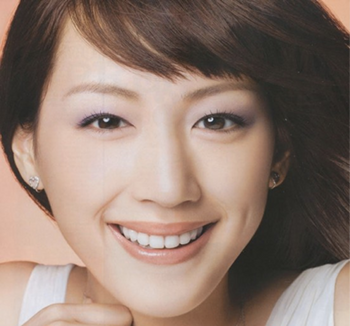
Since we are on the subject of health & beauty, what are the ideal "beauty" requirements in Japan?

1. LIGHT/WHITE SKIN


While smooth, clear skin is considered a fairly universal standard of beauty, in Japan it seems the lighter the skin tone the more beautiful it is.  Most Japanese women will cover their skin with hats and gloves and coats even in the heat to avoid sun exposure. A sun-kissed tan may be appealing  in America but not so much in Japan.

Additionally skin products in Japan are considered the best in all of Asia.  I'm told that residents of other Asian countries will come to Japan to buy cosmetics and other beauty products. 


2. HIGH-BRIDGED NOSE

I'm told, the opposite from that of America is true regarding noses.  The stronger, higher, slightly bigger nose bridge makes you unique and exotic looking. Some Japanese women dislike their noses because they’re too small! I have even seen ads for nose injections here in Japan. 


3. SMALL/SLIM FACE

A round face is not appealing in this culture. Are you aware that not all Asians have the same facial features and that they do not like to be confused with each other's nationalities?


4. THIN/PETITE

Most women are extremely petite in this culture.  Before coming to Japan, I thought all Asian women had a very straight up and down figure, sometimes called a "rectangle" shape. 


However, I have been shocked at the extremely tiny size of some of the women's waists.  

While the majority of  women tend to be petite all over, there is some kind of obsession in this culture with large breasts.  The anime characters, which are SO very commonly seen in Japan, almost always have cleavage and curves.  


Bon Kyu Bon is an expression used when talking about a woman’s body shape. The first “bon” symbolizes a large bust, “kyu” means having a small waist, and “bon” means having a large curve at hips. Bon kyu bon is the Japanese equivalent of an hourglass figure.


5. DOUBLE EYELID

This picture says it all:


One of the options for plastic surgery in this country is a procedure that changes eyelids from those pictured at the top to those pictured at the bottom. 


01 February 2021

Q&A - Bicycles

Q: Why are their bikes tidy and ours are haphazard?


A: This question is in reference to a picture that I posted a while back which compares Japanese bike storage on base to American military personnel's bike storage on base. 


I hope that my recent posts about doing things the "Japanese" way lead you to an understanding of this phenomenon.  In Japan, you are raised to do things correctly, and you are taught not to bring shame on your family by not following the rules.  Things are just done with precision and care in this country.  The Japanese nationals who work on base would never think of hopping off their bikes and throwing them down on the ground and running into their work space.  American teenage sailors do that all the time.  They don't care how it looks or who else it might effect.  It never crosses the American teenager's mind to take the time to do it right.